Renewal Tracking Software for VARs and Distributors (2026)
Renewal tracking software for VARs and distributors must read email signals, not just CRM fields. See what generic tools miss and how channel firms catch up.

- Renewal tracking software for VARs and distributors must capture email signals, not just report on CRM fields that reps may never update.
- VAR renewals involve multiple OEMs, co-term schedules, distributor pricing threads, and partner margins that SaaS-focused customer success platforms cannot model.
- At channel companies, most renewal conversation happens in email threads with OEMs, distributors and customers, not in CRM activity logs.
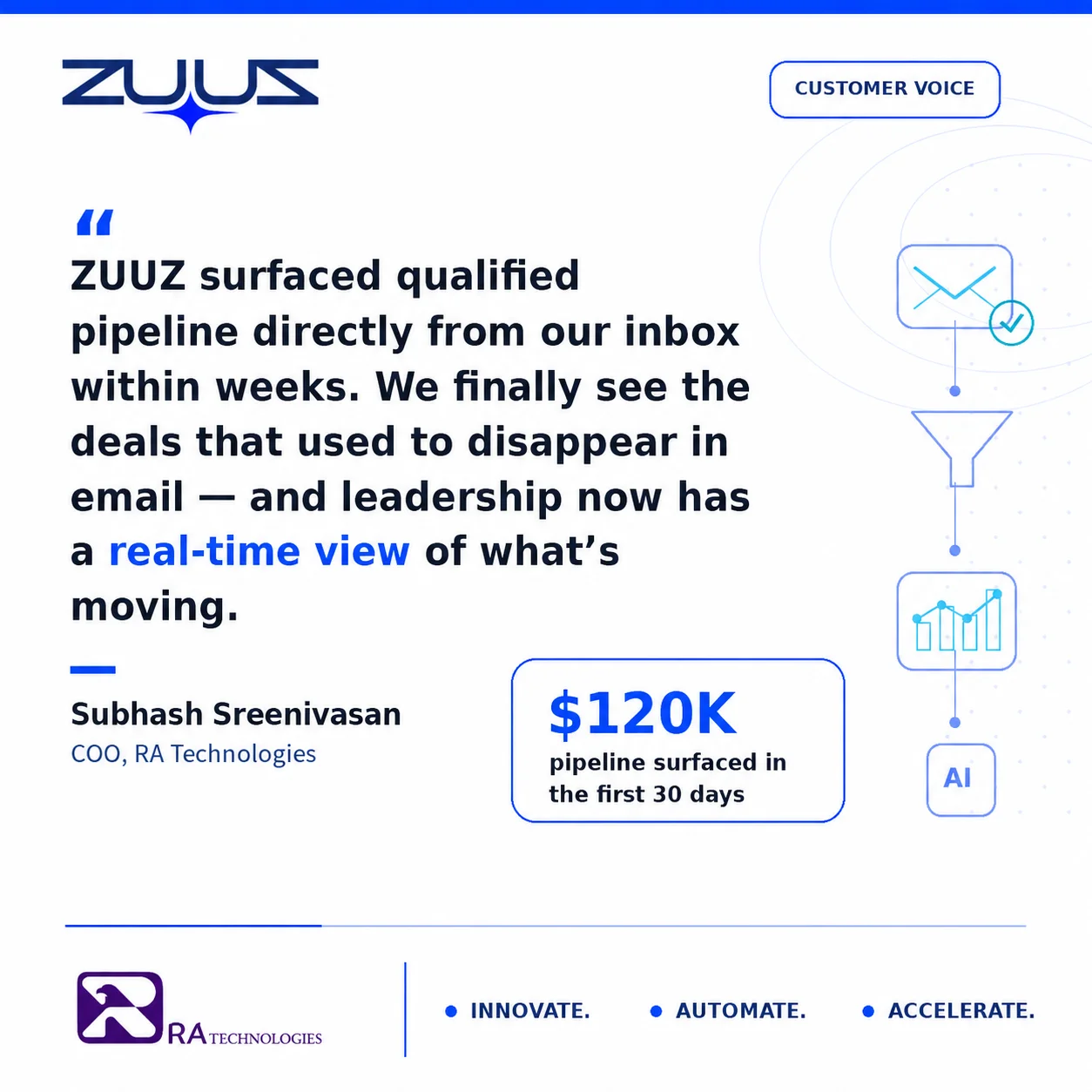
- RA Technologies, a US IT services company, surfaced $120K in renewal and pipeline signals from a 90-day historical email lookback using ZUUZ.
- Effective renewal tracking software deploys in days, not months, and requires no change to rep workflows to generate forecast impact.
- Six specific email signals consistently predict renewal risk before they surface in any CRM field: silence, eval mentions, competitor references, utilization questions, contact changes, and billing queries.
- ZUUZ is an AI layer on top of the CRM a channel team already runs, not a CRM: it connects to your sales inbox, reads LinkedIn messages and meeting or call transcripts, and writes leads, stakeholders, next steps and renewal signals into Salesforce, HubSpot, Zoho, Attio or Pipedrive for the rep to approve in one click.
Renewal tracking software for VARs and distributors has to solve a fundamentally different problem than tools designed for SaaS companies. A SaaS renewal involves one vendor, one customer, and one contract date. A VAR renewal involves three OEMs with separate co-term schedules, a distributor supply chain, multiple SKUs at different utilization levels, partner margins after rebates, and a pricing discussion buried six levels deep in a forwarded email thread.
Most renewal tracking software was not built for that reality. CRM native renewal modules report what someone logged. Customer success platforms optimize for SaaS health scoring. Channel-specific tools handle contract dates but rarely surface the risk signals that determine whether a renewal actually closes. The result is a renewal view that looks clean in the CRM while the conversations that decide each renewal sit in inboxes.
This guide covers why generic tools fail channel companies, what signals they miss, and how to evaluate renewal tracking software built specifically for VARs and distributors. The analysis draws on direct experience running Cloud Box Technologies, a $25M ARR IT services and distribution company, and on documented results from ZUUZ customer deployments.
Why Generic CRM Renewal Modules Fail VARs and Distributors
A CRM renewal module is a reporting tool. It tells the sales team what someone typed in. It does not tell them what is actually happening in customer relationships between log entries.
Channel companies with mature CRM setups run into this constantly. Renewal dashboards, territory assignments and dedicated account managers are all in place, and the conversation that decides each renewal still happens in email. A co-term discussion with an OEM, a distributor price change, or a customer mentioning a competing bid lands in an inbox first and reaches the CRM only if someone retypes it.
The problem is structural. CRM data quality depends entirely on rep discipline. According to Salesforce’s 2024 State of Sales report, sales representatives spend only 28 percent of their time actually selling, with the remainder split across manual data entry, internal meetings, and administrative work. In a channel company with 200 active customers across three OEMs, expecting reps to log every pricing thread, utilization question, and contact change is not a realistic foundation for renewal forecasting.
See the Pipeline Your CRM Can’t See.
ZUUZ connects to the sales inbox, extracts the deal signal, and writes it to Salesforce, HubSpot, Zoho, Attio or Pipedrive. Book a 15-minute walkthrough on your own inbox.
The Multi-Vendor Renewal Math Generic Tools Cannot Model
Channel company renewals are exponentially more complex than SaaS models. A single customer account at a VAR might involve three OEM contracts with different renewal dates, two distributor supply chain relationships, five product SKUs at varying utilization levels, and a margin calculation that changes after each distributor rebate cycle.
Managing 200 active customers in that environment produces a scenario where the CRM shows one renewal date per account while reality involves dozens of moving pieces, most of them in someone’s inbox. When a customer asks about co-terming their Cisco and Microsoft contracts to align on a single date, that conversation happens over email. When a distributor adjusts pricing mid-cycle, the notification arrives as a forwarded message. None of it lands in the CRM unless someone decides to log it.
The math compounds quickly. Three OEMs, multiplied across 200 customers, with separate co-term schedules and SKU-level utilization tracking, produces a renewal workload that no spreadsheet or basic CRM field can reliably track. This is the structural problem renewal tracking software for VARs and distributors must solve. The same dynamic explains why a CRM pipeline misreports real renewal activity at most channel companies.
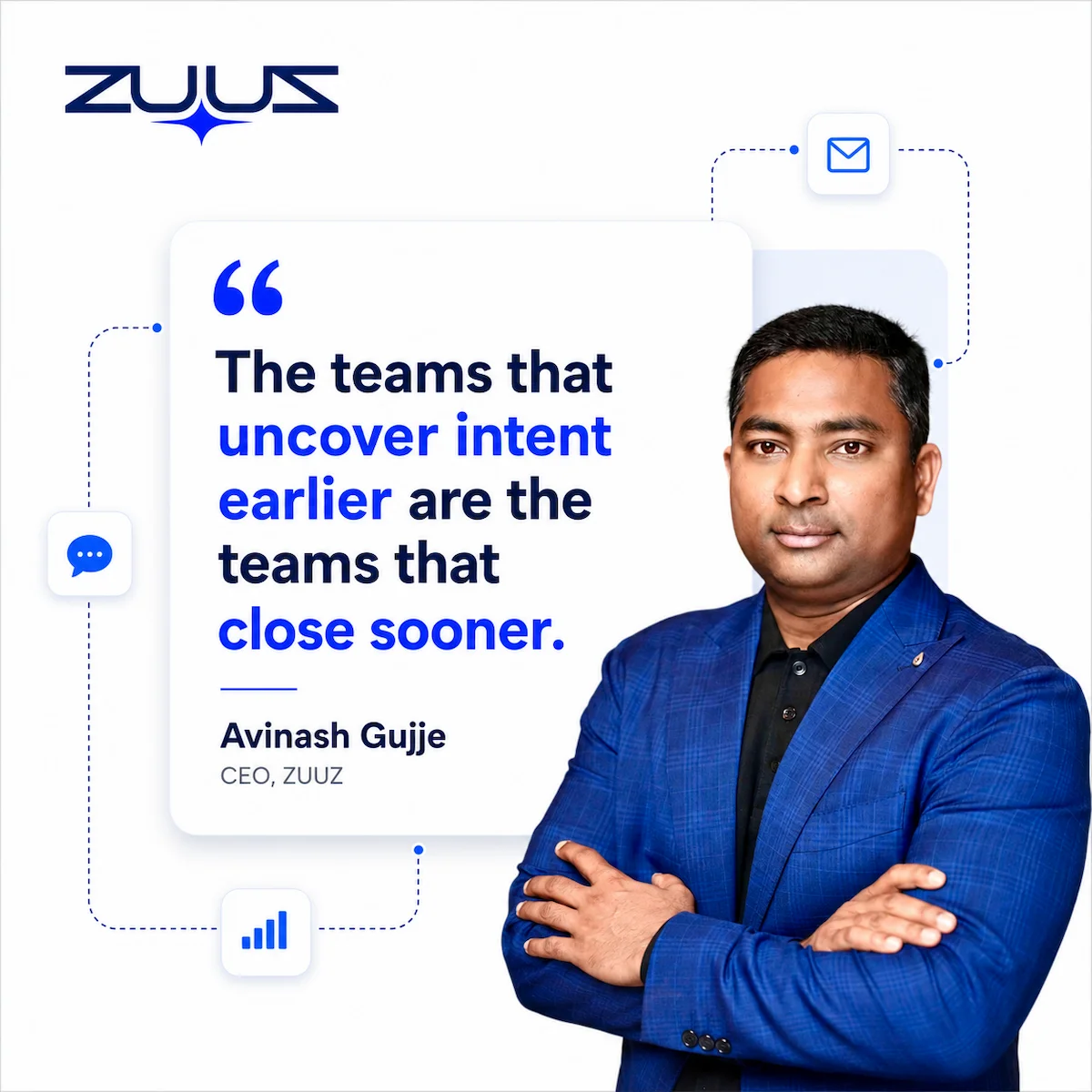
Six Renewal Risk Signals Hidden in Email
Six specific signals consistently predict that a renewal is at risk before any CRM field reflects it. All six appear primarily in email threads, not in logged CRM activity.
The Silent IT Director
A customer contact who previously responded within 24 hours and has gone quiet for three weeks is sending a signal. The absence of expected communication is not captured by any CRM field. It requires a system that tracks communication cadence against historical baselines and flags when a key contact goes dark.
The Eval Mention
Customers rarely announce they are evaluating alternatives in a direct email. The phrase appears in context: “We are looking at a few options before Q3,” or “Our procurement team wants to review the market.” These references are buried in longer threads and require natural language parsing to surface reliably.
The Competitor Name-Drop
Competitor mentions in renewal threads are high-confidence risk signals. A customer asking for a comparison against a named alternative indicates that the relationship is being actively re-evaluated. This signal almost never reaches the CRM unless a rep happens to log it manually.
The License Utilization Question
Questions about how many licenses the customer is actually using signal either a potential downsell or a risk of non-renewal at current contract value. Utilization questions framed around “right-sizing” or “efficiency” before a renewal date are particularly significant.
The Primary Contact Change
A new decision-maker appearing in an existing thread, or a longtime contact going silent while someone from procurement begins responding, indicates a relationship shift. New contacts have no loyalty to the incumbent vendor and frequently trigger competitive evaluations.
The Billing or PO Query
Procurement inquiries about billing timelines, PO requirements, or payment terms often indicate an active buying window. They also sometimes signal renegotiation intent. Either way, they represent a signal that the renewal is in motion and needs attention from the account team.
The Renewal Signal Check
Those six signals are only useful if someone looks for them deliberately. The Renewal Signal Check is the exercise that finds renewal and expansion risk living outside the renewal date field, and it takes an afternoon.
- List every renewal in the next two quarters and its date field.
- For each, find the last real conversation, email, message or meeting, and what it said about budget, champion or satisfaction.
- Mark every renewal where the date is the only thing the system knows.
- Those are the renewals that surprise you. The signal existed; it was in a mailbox.
Worked for a VAR or distributor: a multi-OEM account renews in eleven weeks and the CRM holds the date, the previous order value and nothing else. The mailbox holds a thread where the customer asked what happens if two of the three OEM lines come off co-term, a reply from a procurement address nobody has as a contact, and silence for nineteen days after the last pricing note. The date field says on track. The mailbox says the bundle is being unpicked. Running this check across a renewal book usually sorts it into three piles: renewals with a recent written commitment, renewals with a recent conversation and no commitment, and renewals the system knows by date alone. That third pile is the scope of the problem, and it is the number to quote when asking for budget for a renewal tool.
Four Tool Categories and What Each Misses
The renewal software market for channel companies falls into four categories. Each has genuine strengths. Each has a gap that creates forecast blind spots for VARs and distributors specifically.
| Tool Category | Primary Strength | Critical Gap for VARs | CRM Integration |
|---|---|---|---|
| CRM-native renewal fields (Salesforce, HubSpot) | System of record; pipeline visibility across teams | Reports only on logged data; cannot read email signals or detect unreported risk | Native (it is the CRM) |
| Customer success platforms (Gainsight, Totango) | Health scoring; automated playbooks; usage data integration | Built for SaaS direct sales; no channel economics, co-term modeling, or distributor pricing logic | Via API; often requires custom mapping |
| Channel-specific renewal tools (Renewtrak, Quoter) | Co-term handling; vendor quoting; distributor pricing feeds | Tracks contract dates and pricing; limited or no email signal capture for risk identification | Varies by vendor |
| AI-native email parsing (ZUUZ) | Email signal reading; risk classification; native CRM sync without middleware | Requires inbox access permission; initial calibration takes the first two weeks | Native to Salesforce, HubSpot, Zoho, Attio or Pipedrive |
The pattern across the first three categories is consistent: they track what is already in a system. Renewal tracking software for VARs and distributors that actually reduces revenue leakage must go further. It must read what is happening in communication channels where customer relationship signals originate.
For a deeper view of how multi-product renewal complexity affects tracking requirements, see how to track renewals across multiple products.
One category line keeps the comparison honest. ZUUZ is an AI layer on top of the CRM a channel company already runs: never a CRM, never a replacement for one, and not another dashboard to log into. Customer success platforms and CRM renewal modules report on the renewal fields a rep remembered to update; ZUUZ writes the record from the renewal conversation itself, and the account manager approves it before it lands in Salesforce, HubSpot, Zoho, Attio or Pipedrive.
Cloud Box Technologies: How ZUUZ Tracks 10 to 12 Renewals in Minutes
Cloud Box Technologies is where ZUUZ founder Avinash Gujje scaled an IT services and distribution business from zero to $25M ARR, and it is also a ZUUZ customer. Its renewal book looks like any VAR’s: multi-OEM contracts, distributor pricing, co-term dates, and account managers carrying dozens of customers, with the real renewal conversation running in email.
The company uses its CRM mainly for order processing. With ZUUZ connected, inbound email turns into leads and renewals automatically, so leadership sees live pipeline in real time from a single connected user. Tracking 10 to 12 renewals now takes minutes.
The operator lesson from running that business carries over to any channel company. Renewal risk rarely shows up in the CRM first. It shows up in a thread where a customer asks about a competing bid, a new IT director is copied in, or an OEM changes co-term terms, and a renewal tool that cannot read those threads is reporting on the part of the renewal that was already decided.
The pattern is not unique to any one company. In channel organizations the lag between an activity happening and that activity reaching the CRM is structural, because logging competes with selling for the same hours in the day. For renewal-specific communications the gap tends to be wider still, since account managers deprioritize logging when they are focused on closing new business.
What the RA Technologies Lookback Found
RA Technologies, a US IT services company, ran a 90-day historical email lookback using ZUUZ. The system surfaced $120K in renewal and pipeline signals from threads that had never been logged in the CRM. The deals were not lost. They were in email, invisible to the forecast, and being managed informally by individual reps without any systematic tracking.
The lookback made existing pipeline visible for the first time. It did not require reps to change behavior. The signals were already there. The system simply read them and surfaced them in a format the sales leadership team could act on.
For IT companies evaluating email-to-CRM automation more broadly, the email-to-CRM automation guide for IT companies covers how this category of tool works across different use cases beyond renewals.
VAR and Distributor-Specific Requirements Most Software Misses
Four capabilities separate renewal tracking software built for channel companies from tools adapted from SaaS or direct sales contexts.
Distributor Pricing Thread Parsing
Customer pricing requests at a VAR rarely arrive as clean, direct emails. They come as forwarded messages from distributors, forwarded again from the customer, sometimes with pricing attachments that reference SKUs by part numbers rather than product names. Renewal tracking software for distributors must follow these forwarding chains and locate the original customer request regardless of how many hands it passed through.
OEM Co-Term Handling
A customer running Cisco networking, Microsoft 365, and a CrowdStrike endpoint solution through the same VAR has three separate contract renewal dates. Co-terming aligns them to a single date to simplify the customer’s procurement cycle. Managing co-term schedules across a 200-account customer base requires native modeling of multi-OEM timelines, not manual date entry into CRM fields.
Multi-Product Bundle Visibility
Bundle renewals require SKU-level tracking, not just aggregate contract values. A customer renewing a bundle at the same total value might be dropping two products and adding one. That shift in SKU mix signals a change in the relationship that aggregate reporting does not surface. Renewal tracking software for VARs must show what is actually renewing, not just what the contract total shows.
Partner Margin Protection
Renewal value for a VAR is not the contract value. It is the margin after distributor splits and OEM rebates. Renewal software that shows gross contract values without accounting for partner economics gives sales leadership an inaccurate picture of what is actually at risk in the renewal forecast.
How to Evaluate Renewal Tracking Software for VARs
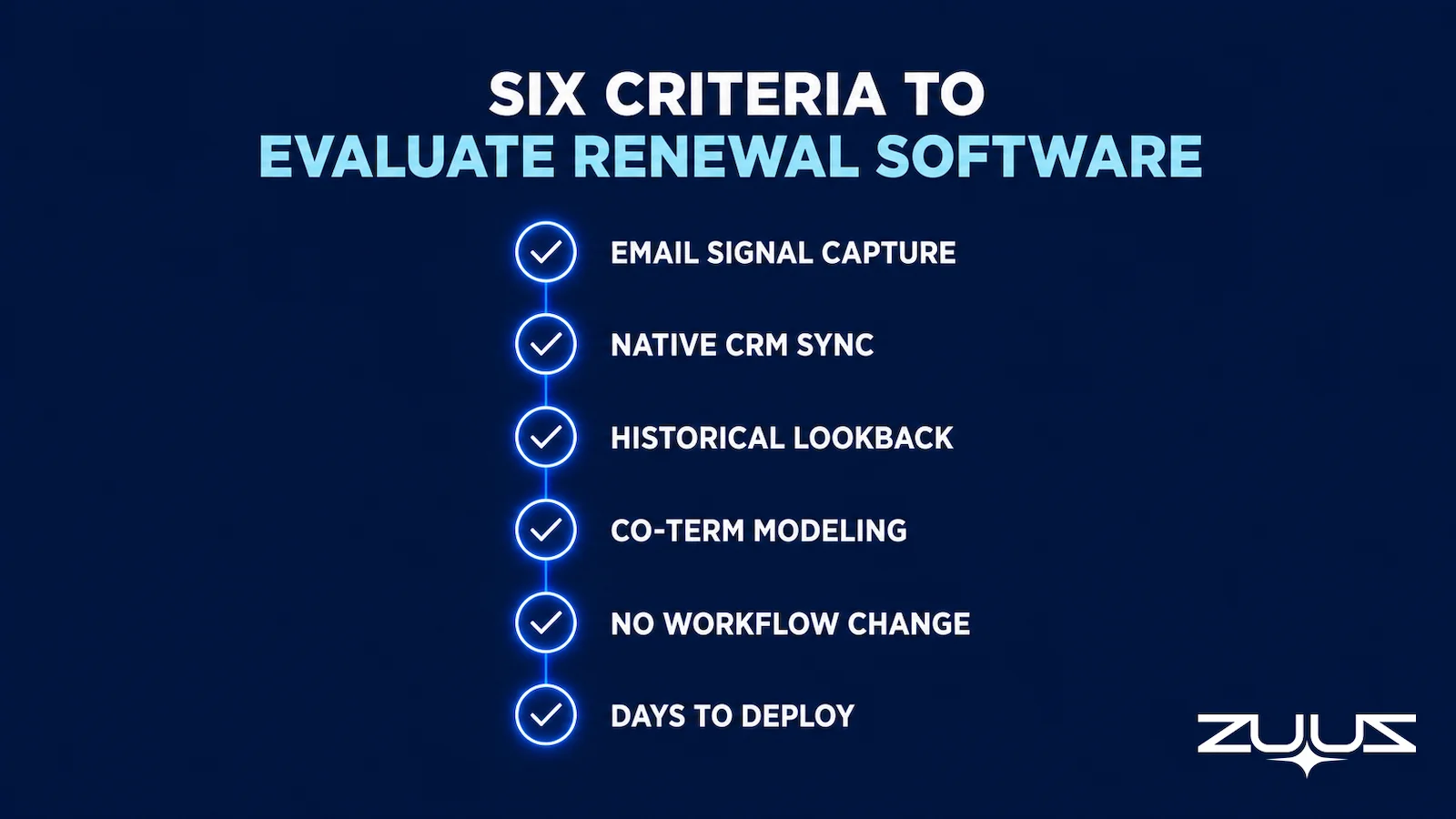
Six criteria separate tools that reduce renewal leakage from tools that add another dashboard to an already crowded tech stack.
| Evaluation Criterion | What Good Looks Like | Red Flag |
|---|---|---|
| Email signal capture | System reads actual email threads for risk signals without requiring manual logging | Tool depends entirely on rep-entered CRM data for renewal status |
| CRM integration | Native sync to Salesforce, HubSpot, or Zoho; writes to existing CRM objects | Requires middleware, custom API work, or a separate database |
| Historical lookback | Processes 60 to 90 days of past email to surface backlog pipeline immediately | Only captures signals from the date of deployment forward |
| Co-term modeling | Native support for multi-OEM contract alignment across a customer account | Treats each contract as an isolated renewal with no relationship to other contracts |
| Workflow impact | Runs transparently; reps do not need to change how they work to generate output | Requires reps to use a new interface or adopt new logging habits to function |
| Deployment timeline | Connection setup in days; material forecast impact within 30 to 45 days | Six-month implementation plan indicates an integration project, not a deployed tool |
The CRM-agnostic requirement is worth emphasizing. VARs and distributors often run different CRM platforms across divisions or acquired businesses. Renewal tracking software that is built for one CRM and bolted onto others through custom integrations creates maintenance debt that compounds over time. ZUUZ operates natively across Salesforce, HubSpot, Zoho, Attio or Pipedrive from a single deployment.
For a broader view of pipeline visibility tools for IT companies, the IT sales pipeline visibility tools guide covers the full category including how renewal tracking fits into a complete revenue operations stack.
Implementation: The First 30 Days
Renewal tracking software for VARs and distributors should not require a multi-month implementation project. A tool that takes six months to deploy is not solving the renewal leakage problem during that period. It is creating a second problem alongside it.
Week 1: Connect and Look Back
Connect the email environment and CRM in the first week. Run a 60 to 90 day historical lookback in the background. This surfaces the existing pipeline and renewal backlog that is already in email threads but invisible to the forecast. Most channel companies find material pipeline during this phase, as RA Technologies found with their $120K backlog.
Week 2: Review and Calibrate
Review the lookback findings with the renewal team. Calibrate classification thresholds to match the company’s specific customer base, OEM mix, and communication patterns. A company with a high volume of distributor-forwarded pricing threads will need different calibration than one that communicates primarily through direct customer relationships.
Week 3: Approve Sync Rules and Go Live
Approve the CRM sync rules that determine what signals get written to which CRM objects and at what confidence threshold. Begin live email processing. At this point, the system is generating active output from real customer communications without any change to how reps work.
Week 4: Team Briefing
Run a 30-minute briefing with the account team to explain what the system surfaces and how to act on its output. The session is brief because the system does not require reps to adopt new tools or workflows. It surfaces information into the CRM objects they already use.
Most channel businesses see material forecast improvements within 30 to 45 days. The improvement comes from signal capture, not from adding effort to already stretched account teams.
For companies that have previously struggled with missed leads from email more broadly, the guide to fixing missed sales leads in email covers the systematic causes and solutions that apply beyond renewal tracking specifically.
From an operator’s seat
Across the deployments ZUUZ runs at channel companies, the pattern is that the first week produces an argument about ownership rather than a list of at-risk renewals. A renewal thread usually involves three mailboxes, the account manager, the person who handles distributor pricing and whoever raises the PO, and the account in the CRM belongs to one of them. Until that is settled, signals land on records nobody is watching. The part teams do not plan for is co-term dates arriving as attachments. OEM quote documents and distributor renewal schedules carry the real dates, and a team that connects only the mail body sees the conversation and misses the calendar inside the PDF. The other thing worth knowing in advance: the billing or PO query is the single most valuable signal to route first, because it is unambiguous, it is always written down, and it sits close enough to the renewal date that acting on it still changes the outcome.
A concrete first step
Do not start with a renewal book migration. Connect one mailbox, the one the account managers actually use with customers and distributors. ZUUZ reads the last 90 days and shows what it found: the contacts, the stakeholders who appeared mid-thread, the next steps that were committed and the renewal signals that never reached the CRM. The account manager reviews that list before anything is written, and the CRM stays the system of record. It is a 30-day free trial, no credit card, at https://zuuz.ai/trial/. Run the Renewal Signal Check on the same book first and the lookback doubles as the answer key.
Stop Losing Pipeline in the Inbox.
Connect your CRM in minutes and let ZUUZ capture the signals your team never logs. Start free, with no integration project required.
Frequently Asked Questions
What Is Renewal Tracking Software for VARs and Distributors?
Renewal tracking software for VARs and distributors combines CRM contract-date fields with email signal capture and multi-OEM co-term modeling. Unlike SaaS-focused customer success platforms, channel-specific tools follow pricing threads through distributor forwarding chains, identify at-risk signals buried in email, and sync findings natively to Salesforce, HubSpot, or Zoho without middleware. The distinguishing capability is reading what is happening in communication, not just reporting what was logged.
How Does VAR Renewal Tracking Differ From SaaS Renewal Tracking?
SaaS renewal tracking manages a single vendor-to-customer contract relationship with one renewal date and one pricing tier. VAR and distributor renewals involve multiple OEMs with separate contract dates, distributor supply chains, co-term schedules across SKUs, and partner margin calculations after rebates. Most customer success platforms are built for SaaS direct sales and cannot model these channel economics. Applying a SaaS renewal tool to a VAR context produces a forecast that misses the structural complexity of how channel renewals actually work.
Which CRM Platforms Does Channel Renewal Software Integrate With?
Leading renewal tracking tools for channel companies sync natively with Salesforce, HubSpot, and Zoho. The critical differentiator is whether the integration requires middleware or custom development. Native sync that writes directly to existing CRM objects reduces adoption friction and eliminates the need for a separate integration project. ZUUZ operates across all three platforms from a single deployment without requiring custom API work or a dedicated integration team.
What Renewal Risk Signals Appear in Email but Not in the CRM?
The six most common signals hidden in email are: the silent IT director (absence of expected communication indicating relationship cooling), evaluation mentions referencing competing vendors, competitor name-drops buried in lengthy threads, license utilization questions that signal downsell risk, primary contact changes indicating relationship shifts, and billing or PO queries indicating an active buying window or renegotiation. All six appear in email before they would ever be logged in a CRM field by a rep.
How Long Does Implementation Take for Renewal Tracking Software?
Connection setup for email and CRM typically takes days, not months. A 60 to 90 day historical email lookback runs in the background during Week 1. Most channel companies see material forecast improvements within 30 to 45 days through signal capture rather than new rep workflows. If a vendor quotes a six-month implementation timeline, that reflects a custom integration project, not a deployed tool. Renewal leakage continues throughout any implementation period, so deployment speed is itself a business outcome.
How Much Revenue Do Channel Companies Typically Find in a Historical Email Lookback?
Results vary by company size, customer count, and how consistently reps log activity in the CRM. RA Technologies, a US IT services company, surfaced $120K in renewal and pipeline signals from a 90-day email lookback. The signals were already present in existing email threads; the lookback made them visible to the forecast for the first time. Companies with lower CRM data quality tend to surface proportionally more pipeline from lookbacks because more customer communication exists only in email.
What does co-terming mean for VAR renewals?
Co-terming aligns the end dates of several subscriptions or licenses so they renew together, usually by prorating licenses added mid-term to the existing end date. For VARs and distributors it simplifies the renewal calendar, but one co-term conversation can change several contracts at once, so the thread where it was agreed needs to be tracked against the right account.
See What Your Inbox Is Actually Doing.
Avinash Gujje, CEO of ZUUZ, runs 15-minute demos showing exactly what channel companies find in their first 90-day lookback. See your real renewal pipeline before a single rep changes how they work.

CEO of ZUUZ. He scaled Cloud Box Technologies from 0 to $25M ARR in IT services and distribution, managing multi-OEM renewals, distributor relationships, and a 200-plus account customer base before building ZUUZ. Connect on LinkedIn